MENU
CLOSE
Exploding Plastic Inevitable
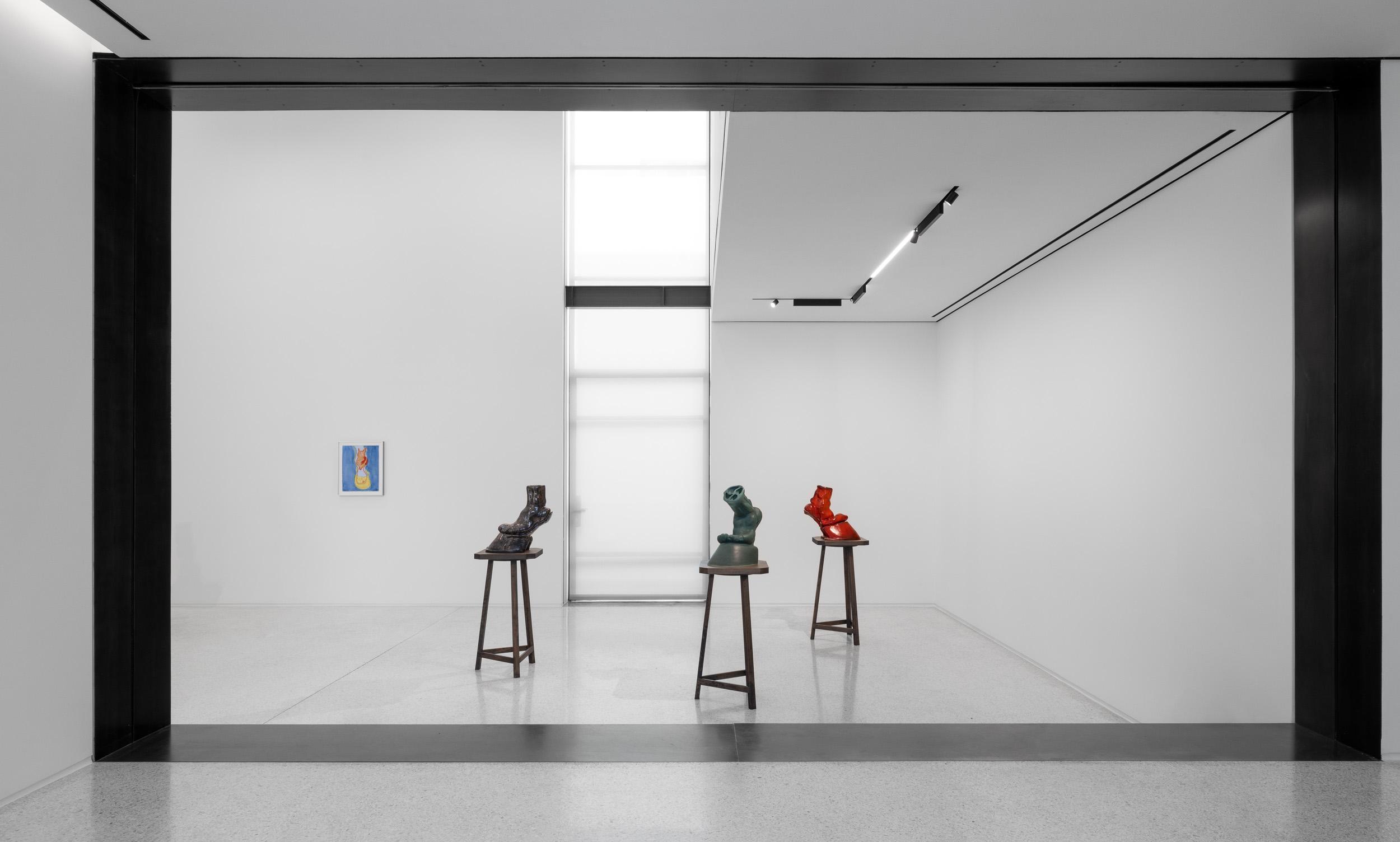


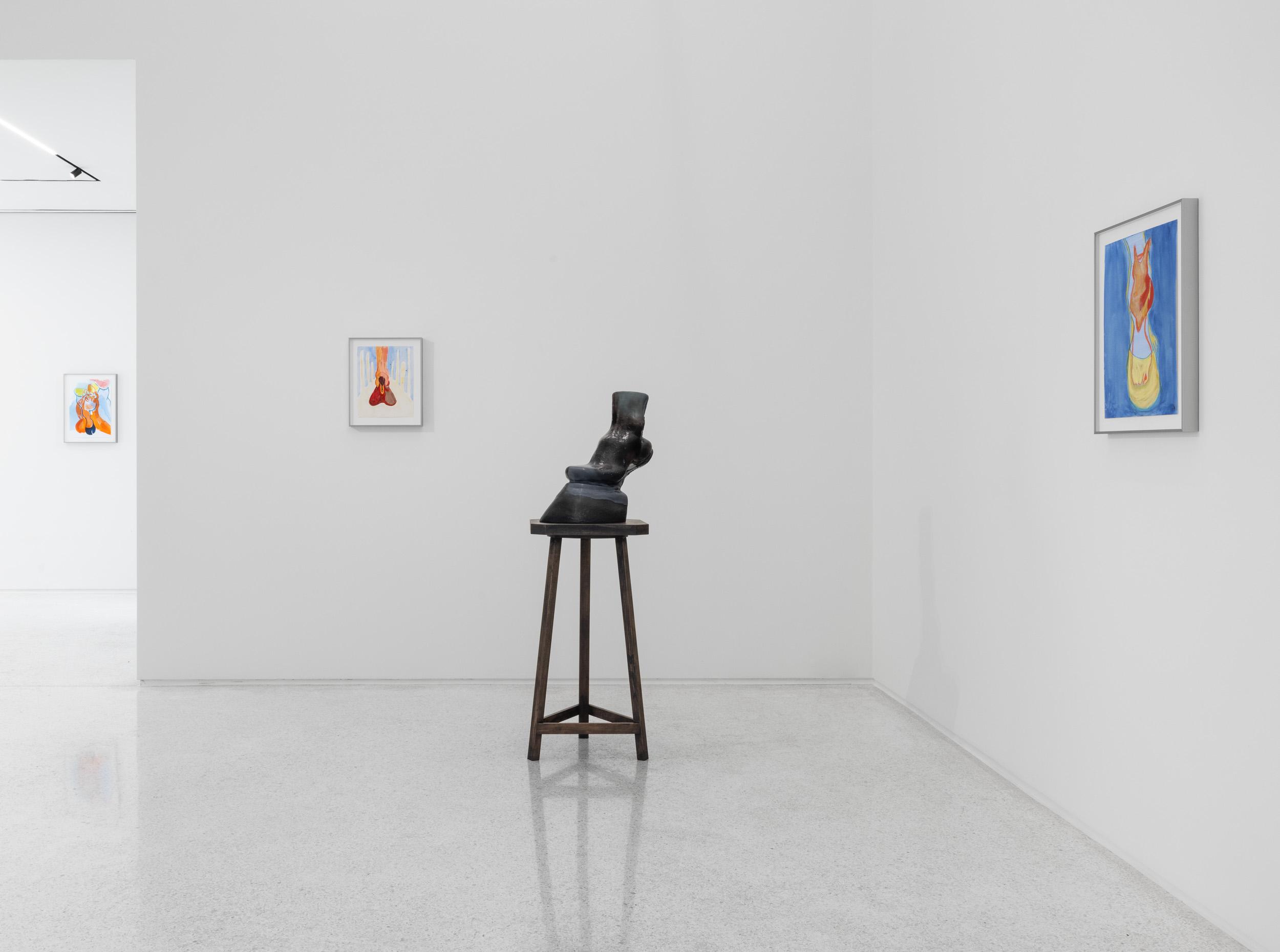
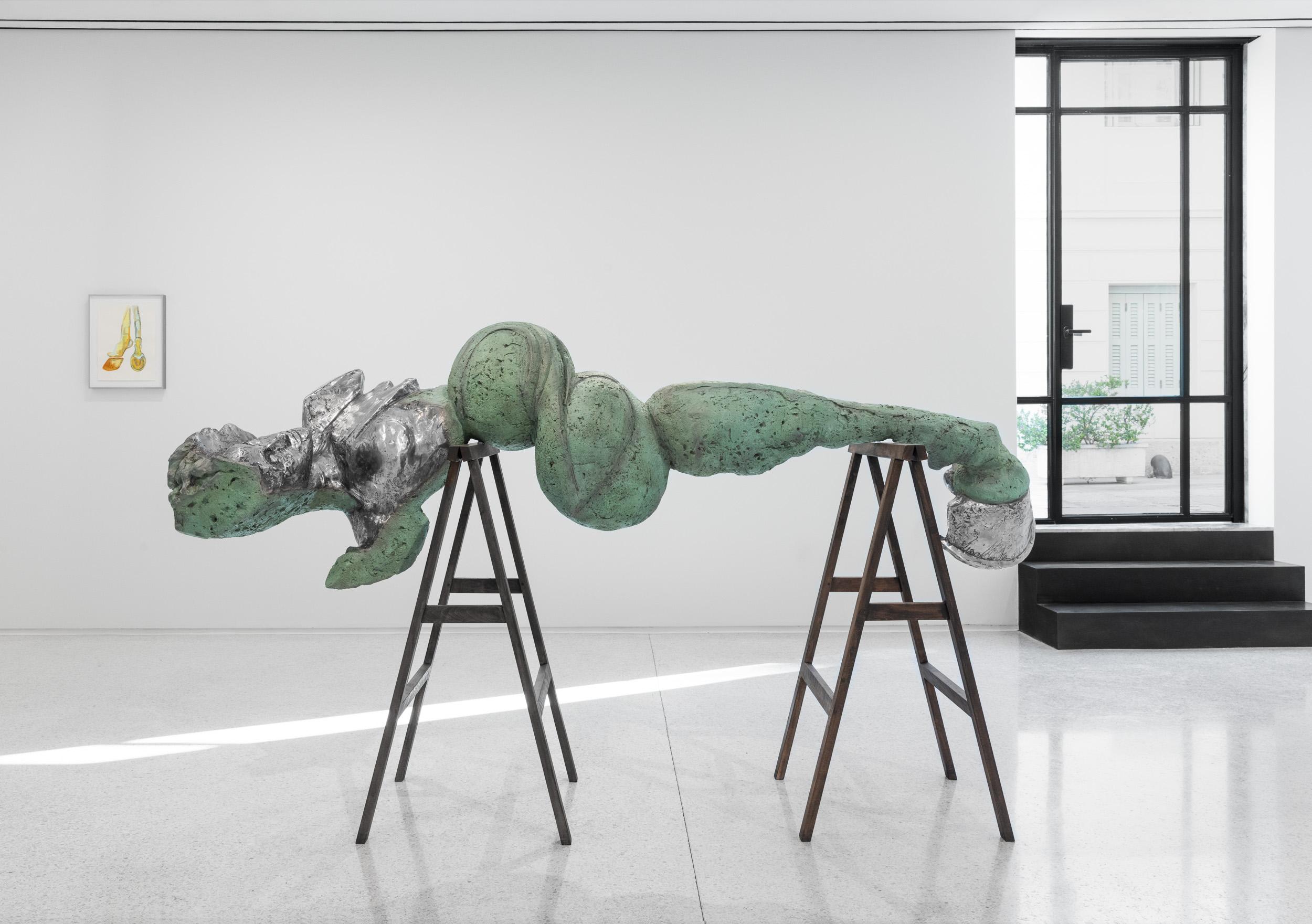


Exploding Plastic Inevitable, 2025 (φωτο: Πάρις Ταβιτιάν)
01/10
Το ARCH είναι στην ευχάριστη θέση να ανακοινώσει την έκθεση Exploding Plastic Inevitable της καλλιτέχνιδας Lena Henke.
Η Lena Henke ζει και εργάζεται στη Νέα Υόρκη και στο Βερολίνο>
Έχει εκθέσει στο Whitney Museum of American Art, Νέα Υόρκη (2018), Hessel Museum of Art, Νέα Υόρκη (2018), Kunstmuseum Luzern, Ελβετία (2018), Schirn Kunsthalle Frankfurt (2017), Sprengelmuseum Hannover (2017), Museum of Contemporary Art, Detroit (2017), Timisoara Contemporary Art Biennale, Ρουμανία (2017), Manifesta 11, Ζυρίχη (2016), 9η Berlin Biennale (2016), La Biennale de Montréal (2016), Kunstverein Braunschweig, Γερμανία (2016), Triennale of Small Scale Sculpture, Fellbach, Γερμανία (2016), S.A.L.T.S., Βασιλεία (2016), The New Museum, Νέα Υόρκη (2015), Socrates Sculpture Park, Νέα Υόρκη (2015), Kunsthalle Bern, Ελβετία (2014), Kuenstlerhaus Graz, Αυστρία (2014), White Flag Projects, St. Louis (2014), Sculpture Museum Glaskasten, Marl (2014), Institute of Contemporary Art, Μαϊάμι (2013) και Kunstverein Aachen, Γερμανία (2012), μεταξύ άλλων.
Έχει τιμηθεί με πολυάριθμα βραβεία και υποτροφίες, όπως το Marta Herford Award του Ιδρύματος Wemhöner (2022), το 8ο RUBENSFÖRDERPREIS της πόλης Siegen, Γερμανία σε συνεργασία με το Museum für Gegenwartskunst Siegen, και την υποτροφία Pollock-Krasner Foundation (2019). Το 2024 ανακηρύχθηκε καλλιτέχνιδα της χρονιάς από τον καλλιτεχνικό οργανισμό Topical Cream, Νέα Υόρκη.
Το έργο της έχει αναλυθεί σε πολυάριθμες δημοσιεύσεις, μεταξύ άλλων στα Artforum, Frieze, Art in America, The New York Times, Artnews και Spike magazine, καθώς και σε διάφορους καταλόγους εκθέσεων.
Το 2013, η Henke συνίδρυσε τον εκθεσιακό χώρο M/L Art Space, ένα συνεργατικό επιμελητικό πρότζεκτ που λειτουργεί κυρίως στους δρόμους και σε ημι-δημόσιους χώρους της Νέας Υόρκης.
Κείμενο της Laura McLean-Ferris:
"If you are in the presence of a Barbara, you should be aware that you might be in a place where explosions are possible. For those who work in the crackle of fires, furnaces, explosives, kilns, foundries, and in the bowels of the earth, Saint Barbara is the patron saint and protector. While miners often place her effigy at the entrance to tunnels and caves to protect them, certain metalworkers place figurines of Saint Barbara on top of their furnaces to ward off accidents.
There is a Barbara at the art foundry in Berlin where Lena Henke created her aluminum sculpture Unforced Error (2025), a large prone figure that seems to be in the process of metamorphosis. It has one human leg with a horse’s hoof and a bulbous midsection of polymorphic buttock and belly-like protrusions that summon the burgeoning flesh of Hans Bellmer’s poupée experiments: photographs of disassembled and reassembled doll parts, and of the body of his partner, Unica Zürn, tied with ropes so that her flesh bulged uncannily like that of a grotesque doll, often appearing as though headless. Unforced Error has one single, large female breast and her head is a copy of the one on the foundry’s own Barbara figurine. With this localized appropriative gesture, Barbara is tied forever to the fiery scene of her birth and has been transmuted into not only an angel of the metalworkers and fabricators, but also of artists and sculptors. With her site-specific face, Barbara becomes a kind of pure sculpture, and the coincidence of her name with that of Barbara Hepworth, a creator of powerful, heavy-duty Modernist sculptures in bronze, stone and wood, duplicates and diffuses the identity of ‘Barbara’ as both artist and muse.
That the head of Barbara should be attached to this chimerical body is noteworthy, given that Saint Barbara of legend was decapitated by her father. Barbara’s story, appearing in 7th century, is of doubtful origin, and has the salacious tang of fantasy. According to legend, she was a 4th century virgin kept in a tower by her father, who wanted to protect her from potential suitors. Unbeknownst to her pagan father, Barbara secretly converted to Christianity, organizing the installation of three windows in her tower to signify the Holy Trinity. Catastrophe ensues. Barbara refuses marriage and is tortured, her wounds miraculously heal, she flees, and performs miracles, but is ultimately beheaded by her father, offering a prayer as she dies, and becoming a Christian martyr. Her father is immediately struck down by lightning and turned to ashes. Her legend’s relationship with explosive electricity became seared on the public consciousness, particularly in the 15th and 16th centuries, when she was the subject of several popular mystery plays in France. Where Barbara is depicted in paintings, she is almost always pictured with a tower, one that often resembles the ominous Tower Card of a tarot deck or a Tower of Babel. A notable exception is a 1437 drawing on oak panel by Jan Van Eyck, which shows Barbara seated in front of a tower that resembles Cologne Cathedral. Unusually, is a drawing on a wooden panel with a painted sky, leading to some uncertainty about whether it is intended as a finished work or not. If it is, it is the oldest surviving drawing by any artist.
“I live alone in a round tower chamber,” writes Unica Zürn in her novella The Trumpets of Jericho (1968), a hallucinatory text located in artist and writer’s experiences of birth, motherhood, psychedelics, and psychological fracturing. But if Zürn’s protagonist is a Barbara-like figure, her tower might be her own body, which appears as one in which multiple consciousnesses struggle to break out from. “The clouds today look like indecent bodies in impossible entanglements,” she writes, as though looking out of windows, looking out of eyes that are windows. Zürn often wrote anagrammatically, disassembling and reassembling phrases and words to arrive at original combinations, creating new, poetic meanings, but also retaining a cryptographic sense of the occult, of coded meanings and spells. New hybrid sentences are born, though they are almost untranslatable, being reliant on the rearrangement of letters from the words of the German in which they were originally written.
Henke’s language is one that is also split, translated, and recombined, from vocabulary of forms that she has been developing over the past few years, one that also passes between German and English contexts. She has been refining, for years now, the form of a foot on a horse’s hoof, which has appeared in many different scales and manifestations. Her new variations on this subject are the most visceral- that I remember seeing - the feet that sit atop the hoof almost seem as though they have been slashed at the ankle - bringing to mind the anatomical horse studies of a painter like George Stubbs. This focus on anatomy, however, and the layering of one animal foot on the other, newly suggest the real and allegorical speeds of various animals, in the way that sports car logos do. A horse, a human, and a puma all flicker in and out of focus in the new series, as do elements grounded in her German past, including horse fields and automobile manufacturers whip past our eyes like a landscape.
To make the “indecent body” of Unforced Error, Henke amalgamated elements from many of her previous sculptures and studies, including human legs with horse hooves and single breasts, into one body, together with the head of the Barbara. To create this new combination of shapes, she carved freehand into blocks of polystyrene, a material reminiscent of the “clouds” seen from the window of Zürn’s tower. Though light and easy to handle, polystyrene is difficult to cast in aluminum, and its porous structure creates a surface pockmarked with tiny holes, rendering parts of the sculpture fragile and spongelike. Combined with the green verdigris produced by the oxide coating applied to the Athenian iteration of the sculpture, the figure seems both rigidly brittle and softly plastic. A moss-covered or moldy creature, or a dried, lichen-covered husk that has surfaced from the earth. A truly exquisite corpse."
ΔΗΜΟΣΙΕΣ ΣΥΛΛΟΓΕΣ
Το έργο της Henke περιλαμβάνεται σε μόνιμες συλλογές των:
Whitney Museum of American Art, Νέα Υόρκη
Kunstsammlung des Bundes, Βερολίνο
Kunstsammlung des Bundes, Βόννη, Γερμανία
Belvedere Museum, Βιέννη, Αυστρία
Hessel Museum of Art, Annandale-on-Hudson, Νέα Υόρκη
Institute of Contemporary Art, Μαϊάμι, Φλόριντα
MAMCO – Μουσείο Μοντέρνας και Σύγχρονης Τέχνης, Γενεύη, Ελβετία
Sammlungsverbund Wien, Βιέννη
Socrates Sculpture Park, Queens, Νέα Υόρκη
Skulpturen Park Köln, Κολωνία, Γερμανία
Skulpturen Museum Glaskasten Marl, Γερμανία
Συλλογή Heidi Horten, Βιέννη
MAK – Μουσείο Εφαρμοσμένων Τεχνών, Βιέννη
PROJECT ΒΙΒΛΙΟΘΗΚΗΣ
Στο πλαίσιο της έκθεσης Exploding Plastic Inevitable, η Lena Henke προσκάλεσε μια ομάδα καλλιτεχνών και συγγραφέων να συμβάλουν σε μια παρέμβαση στον χώρο της βιβλιοθήκης του ARCH.
Αξιοποιώντας τη σημαντική υπάρχουσα συλλογή βιβλίων του ARCH, η πρωτοβουλία αυτή προτείνει τη δημιουργία μιας νέας, προσωρινής ενότητας, η οποία θα εκτίθεται καθ’ όλη τη διάρκεια της έκθεσης. Μετά την ολοκλήρωσή της, η επιμελημένη αυτή επιλογή θα δωριστεί στη βιβλιοθήκη του ARCH ως μόνιμη προσθήκη.
Η καλλιτέχνις πλαισιώνει αυτή την παρέμβαση μέσω της πρόσφατης πρότασης του Simon Baier για μια "Θεωρία του Σάκου-Μεταφοράς της Γλυπτικής" (Carrier Bag Theory of Sculpture), σύμφωνα με την οποία: «η δυναμική της γλυπτικής έγκειται ακριβώς στο γεγονός ότι δεν εντάσσεται πλήρως ούτε αποσπάται εντελώς από το [...] πλαίσιο της». Η προσέγγιση αυτή συναντά τη δική της διαδικασία — μια υλική, τόπο-συγκεκριμένη μέθοδο που ξεκινά από την αρχιτεκτονική και εξελίσσεται σε κάτι συναισθηματικά πολύπλευρο και ασαφές. Το τελικό έργο προκύπτει μέσα από αυτόν τον ενδιάμεσο χώρο — ούτε εντελώς ορισμένο ούτε απόλυτα ρευστό.
Η Lena Henke εκφράζει το ενδιαφέρον της για τον τρόπο με τον οποίο άλλοι προσεγγίζουν το γλυπτικό μέσο και τα μεταβαλλόμενα συμφραζόμενά του — τι θεωρούν ουσιώδες όσον αφορά τη μορφή, το υλικό, το νόημα και την ιστορία. Στην καρδιά του πρότζεκτ βρίσκεται η ιδέα μιας συλλογικά επιμελημένης επιλογής βιβλίων. Σε κάθε προσκεκλημένο καλλιτέχνη ζητήθηκε να επιλέξει μια έκδοση που υπήρξε καθοριστική για την έρευνά του ή την καλλιτεχνική του διαμόρφωση. Μαζί, αυτοί οι τίτλοι συγκροτούν μια ποικιλόμορφη και στοχαστική λίστα ανάγνωσης — αποτυπώνοντας τη σύνθετη γνώση που θεμελιώνει τις σύγχρονες καλλιτεχνικές πρακτικές και τις αντιλήψεις για τη γλυπτική. Η εν εξελίξει αυτή συλλογή προσφέρει ένα παράθυρο στον διανοητικό και υλικό ορίζοντα που διαμορφώνει τον σημερινό καλλιτεχνικό λόγο.
Συμμετέχοντες και οι επιλογές τους:
Angharad Williams – Anne Carson, Autobiography of Red, 1998, Vintage.
Asta Lynge – Canary Wharf, Architectural Fathers.
Bruno Zhu – Yukio Mishima, Life for Sale, 1968, Kodansha (μετάφραση στα αγγλικά: Penguin Classics, 2019).
Cooper Jacoby – Ben Vickers & K Allado-McDowell (επιμ.), Atlas of Anomalous AI, 2020, Ignota Books.
Emil Sandström – Speculation as a Mode of Production: Forms of Value Subjectivity in Art and Capital.
Esther Kläs – Bruce Chatwin, Songlines, 1987, Jonathan Cape.
Ian Cheng – Keith Johnstone, Impro: Improvisation and the Theatre, 1979, Methuen.
Iris Touliatou – Pierre Bourdieu, Distinction: A Social Critique of the Judgement of Taste, 1979, Harvard University Press (αγγλική έκδοση: 1984).
Isabel Cordovil – Miguel Tamen, Friends of Interpretable Objects, 2001, Harvard University Press.
Isa Melsheimer – Colin Rowe & Fred Koetter, Collage City, 1984, MIT Press. Άρθρο: Crisis of the Object. Predicament of Texture.
Julia Phillips – Jessica Benjamin, Beyond Doer and Done To, 2018, Routledge.
Lena Henke – Behind The Facts: Interfunktionen 1968–1975, 2006, Ediciones Polígrafa.
Marina Xenofontos – Karen Barad, Meeting the Universe Halfway: Quantum Physics and the Entanglement of Matter and Meaning, 2007, Duke University Press.
Nicole Wermers – Michel de Certeau, The Practice of Everyday Life, 1980 (αγγλική μετάφραση: 1984), University of California Press.
Olga Balema – László Krasznahorkai, Satantango, 1985 (αγγλική μετάφραση: 2012), New Directions.
Rachel Harrison – Benjamin Labatut, When We Cease to Understand the World, 2020, Pushkin Press (αγγλική μετάφραση).
Rachel Whiteread – Vladimir Nabokov, Speak, Memory, 1951, Putnam (αναθεωρημένη έκδοση: 1966, Vintage).
Virginia Overton – William Edmondson: A Monumental Vision, 2020, Cheekwood and Vanderbilt University Press.
Καλλιτέχνης:
Lena Henke
Περίοδος Έκθεσης:
05.06.2025–06.09.2025
Προσθήκη στο ημερολόγιο 2025:06:05 19:00:00 2025:09:06 18:00:00 Europe/Athens Exploding Plastic Inevitable Exploding Plastic Inevitable - Περισσότερες πληροφορίες: https://mail.archathens.org/project/exploding-plastic-inevitable